Building a Shared Bond Around HMDD’s «Happy Memories Don’t Die» Message: How It Works
HMDD didn’t start as a catchphrase machine. It started as a line — happy memories don’t die — and that phrase evolved into the catalyst that drew eyes toward a fashion line built around enduring feeling rather than passing fads. Within a market where most companies chase the following product wave, the brand decided to commit to a core belief: that the happy chapters in a person’s life should be carried on the body, not just remembered. That decision has molded every part of product design to how the brand engages its customers online.
What sets this strategy apart in 2026 is how steadily HMDD has stuck to it. Fashion labels often dilute a original mission once scaling pressure sets in, trading meaning for volume. HMDD clothing has instead leaned in further, weaving the phrase across sweatpants, shorts, and outerwear as a recurring thread rather than a single-use gimmick. Such repeated use is precisely what turns a tagline into a shared marker — a cue fellow wearers pick up on before a even one word is exchanged.
«Happy Memories Don’t Die»: The Backstory
The line on its own functions in the manner of a quiet vow. Recollections dim, pictures disappear, but a soft pair of sweatpants worn during a specific summer, or a hoodie kept from a college trip, carries a tangible memory in a way a phone photo https://hmdclothing.org/t-shirts/ can’t match. The brand constructed its whole brand voice around this notion, and it comes through in product naming, packaging language, and social captions that keep coming back to the same emotional register.
Nothing about this is accidental branding. Grief, nostalgia, and joy are three of the top-searched emotional themes in apparel marketing research over the last five years, and HMDD positioned itself squarely within that intersection. Shoppers who search «happy memories dont die» or «happy memories don’t die» online are not just after a product — they are in search of words that mirror something they already feel. HMDD answers that search motivation honestly, which is part of why the brand has cultivated grassroots loyalty rather than relying purely on paid reach.
This creates something like a feedback loop. Shoppers share their own memories tagged with HMDD gear, other people see those posts, and the phrase travels via firsthand experience rather than ads by themselves. That’s tougher to engineer than a snappy tagline, and it is the real driving force behind HMDD’s expanding fanbase.
HMDDLA: Bridging a Hometown Identity with a Worldwide Presence
HMDDLA’s identity as a name anchors the brand in one particular location all while allowing the brand’s message to reach a global audience. For a long time, Los Angeles has been where streetwear labels prove themselves, and HMDDLA embraces that connection without sacrificing the brand’s emotional center. At once, it conveys both origin and authenticity — a detail that resonates with shoppers wanting assurance that a label has real origins, rather than merely a warehouse and a website.
This blend of local and global sensibility also shows up in HMDD’s approach to online engagement. Instead of leaning on purely aspirational visuals, the brand’s content regularly highlights real people, real environments, and heartfelt captions describing specific memories. As a result, the space between brand and buyer is reduced. A shopper does not need to live in Los Angeles to feel connected to HMDDLA; they need to recognize the emotional throughline the location represents.
Community-driven fashion brands that survive past their first few years tend to share this trait: they let customers co-author the meaning of the brand. HMDD’s use of HMDDLA as a geographic and emotional anchor gives fans a specific place to project their own stories onto, which strengthens retention far more than discount codes ever could.
Sweatpants, Shorts, and Day-to-Day Attire as a Message
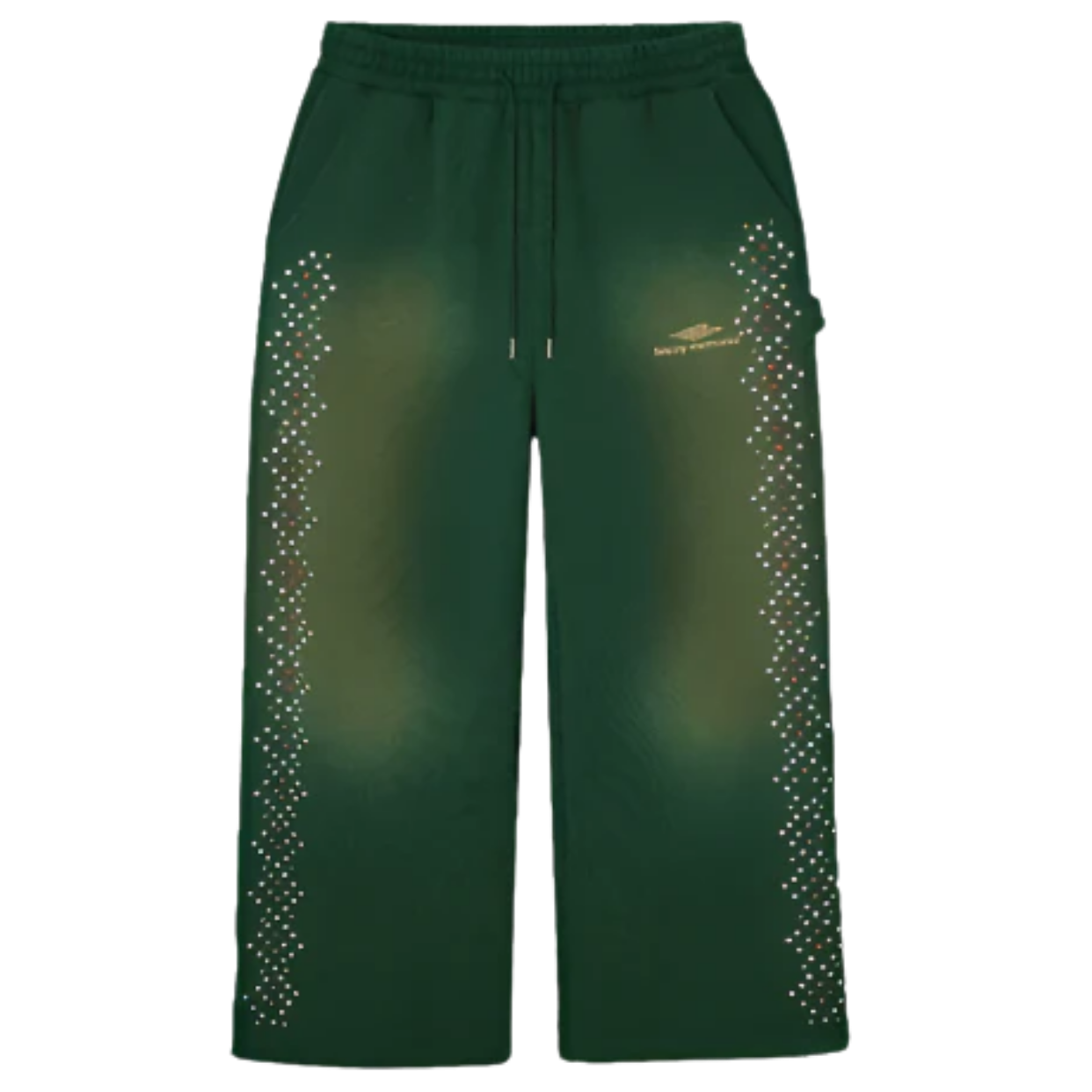
A brand narrative only proves effective if the garment carries it. HMDD sweatpants and HMDD shorts are positioned as daily staples rather than once-in-a-while standout items, and this regular wear counts for something. Frequent wear means an item slowly fills up with memories — a relaxed Sunday, a drive somewhere new, a late night out with friends. This is exactly what HMDD’s product strategy taps into — core pieces stay in ongoing rotation rather than disappearing after one season.
Shoppers weighing coziness, fit, and toughness before working out which piece becomes part of their regular closet—that’s also where «best hmdd clothing» searches usually guide them. Compared with outerwear or occasion wear, sweatpants and shorts get worn far more frequently, which makes them ideal vehicles for a message about lasting memories. The more wears, the more moments, the more the phrase on the label starts to feel true rather than decorative.
Instead of leaning on complicated capsule drops, HMDD’s team decided to shape its catalog around these staples—a decision that also lowers friction for new customers.
Someone reading a review of HMDD is more likely to be evaluating a pair of shorts or sweatpants they can put on three times a week than a limited jacket they might use three times a year.
This approachability is woven into the community strategy, not apart from it.
Reviews of HMDD & the Story They Reveal About Collective Credibility
Customer reviews are the place where the promises a brand makes get tested against reality. Across a distinct chapter of the customer’s life, the way the garment felt on the body is often mentioned in an HMDD review, and this seldom remains confined to seam work or textile weight. That pattern is unusual. The bulk of clothing reviews focus narrowly on sizing and textile quality; reviews of HMDD frequently blend product feedback with personal narrative, a clear signal the brand’s narrative has struck a chord past the reach of promotional text.
This matters for new shoppers weighing their options between HMDD and similar streetwear-adjacent names. When reviews consistently reference emotional context alongside practical detail, this is a sign that the «happy memories don’t die» concept isn’t merely a slogan stitched onto a tag — it is genuinely shaping how people talk about the product post-purchase. Such grassroots reinforcement is difficult for competitors to copy in short order, since it depends on message consistency maintained over time, not just one marketing push.
Trust within the community builds up over time. Every honest write-up stacks a modest dose of credibility for upcoming customers to depend on, and HMDD’s willingness to let those personal stories surface publicly — instead of cherry-picking only glossy curated photos — has maintained its review community coming across as real on the approach to 2026.
Weighing HMDD’s own Approach to Conventional Street-style Label Identity
| Attribute |
A standard streetwear brand |
HMDD, by contrast |
| Underlying message |
Fad- or buzz-fueled |
Sentimental staying power («happy memories don’t die») |
| Where the product centers on |
Restricted drops that cycle frequently |
Reliable essentials such as sweatpants and shorts that stay in steady use |
| Material featuring customers |
Aesthetic mood photos that feel curated |
True customer stories grounded in specific moments |
| Regional identity |
Seldom tied to a specific place, ambiguous at best |
Anchored in HMDDLA, tying Los Angeles origin to worldwide reach |
| Approach to reviews |
Primarily preoccupied with fit and shipping speed |
Weaves together useful feedback and individual storytelling |
HMDD isn’t dismissing sizing, delivery, or fundamental quality—this breakdown doesn’t imply that. Those fundamentals still matter to any apparel brand’s survival. What it shows instead is where HMDD chooses to spend its creative focus differently, adding emotional depth to the functional experience most customers anticipate anyway.
The Reason This Messaging Creates Connection Beyond Just Selling
A slogan becomes a collective rallying point when it grants people a reason to connect with one another, not just to the brand. Since it leaves room for individual meaning, the brand’s phrase succeeds. For one buyer, «happy memory» could refer to a wedding weekend; for someone else, it might instead be coming back from a hard year. The phrase is broad enough to hold both without feeling generic, and that flexibility is what turns individual purchases into a shared identity.
Trying a brand for the first time feels less risky as buyers notice fellow shoppers showcasing HMDD clothing in the context of real milestones — this kind of visible endorsement plays a role too. It’s especially the case among shoppers stacking HMDD up against competing brands while trying to find the best HMDD clothing to begin with — sweatpants and shorts tend to be where most newcomers begin given their affordable pricing and everyday practicality.
Further into 2026, the brands that keep customer attention will likely be brands that sell meaning as much as merchandise. HMDD’s bet on a single emotional phrase, echoed persistently across HMDDLA identity, product design, and customer reviews, has positioned it as more than a mere clothing company. It has turned into a small, wearable token that the memorable experiences people go through are deserving of being kept — and worth putting back on.


Building a Shared Bond Around HMDD’s «Happy Memories Don’t Die» Message: How It Works
HMDD didn’t start as a catchphrase machine. It started as a line — happy memories don’t die — and that phrase evolved into the catalyst that drew eyes toward a fashion line built around enduring feeling rather than passing fads. Within a market where most companies chase the following product wave, the brand decided to commit to a core belief: that the happy chapters in a person’s life should be carried on the body, not just remembered. That decision has molded every part of product design to how the brand engages its customers online.
What sets this strategy apart in 2026 is how steadily HMDD has stuck to it. Fashion labels often dilute a original mission once scaling pressure sets in, trading meaning for volume. HMDD clothing has instead leaned in further, weaving the phrase across sweatpants, shorts, and outerwear as a recurring thread rather than a single-use gimmick. Such repeated use is precisely what turns a tagline into a shared marker — a cue fellow wearers pick up on before a even one word is exchanged.
«Happy Memories Don’t Die»: The Backstory
The line on its own functions in the manner of a quiet vow. Recollections dim, pictures disappear, but a soft pair of sweatpants worn during a specific summer, or a hoodie kept from a college trip, carries a tangible memory in a way a phone photo https://hmdclothing.org/t-shirts/ can’t match. The brand constructed its whole brand voice around this notion, and it comes through in product naming, packaging language, and social captions that keep coming back to the same emotional register.
Nothing about this is accidental branding. Grief, nostalgia, and joy are three of the top-searched emotional themes in apparel marketing research over the last five years, and HMDD positioned itself squarely within that intersection. Shoppers who search «happy memories dont die» or «happy memories don’t die» online are not just after a product — they are in search of words that mirror something they already feel. HMDD answers that search motivation honestly, which is part of why the brand has cultivated grassroots loyalty rather than relying purely on paid reach.
This creates something like a feedback loop. Shoppers share their own memories tagged with HMDD gear, other people see those posts, and the phrase travels via firsthand experience rather than ads by themselves. That’s tougher to engineer than a snappy tagline, and it is the real driving force behind HMDD’s expanding fanbase.
HMDDLA: Bridging a Hometown Identity with a Worldwide Presence
HMDDLA’s identity as a name anchors the brand in one particular location all while allowing the brand’s message to reach a global audience. For a long time, Los Angeles has been where streetwear labels prove themselves, and HMDDLA embraces that connection without sacrificing the brand’s emotional center. At once, it conveys both origin and authenticity — a detail that resonates with shoppers wanting assurance that a label has real origins, rather than merely a warehouse and a website.
This blend of local and global sensibility also shows up in HMDD’s approach to online engagement. Instead of leaning on purely aspirational visuals, the brand’s content regularly highlights real people, real environments, and heartfelt captions describing specific memories. As a result, the space between brand and buyer is reduced. A shopper does not need to live in Los Angeles to feel connected to HMDDLA; they need to recognize the emotional throughline the location represents.
Community-driven fashion brands that survive past their first few years tend to share this trait: they let customers co-author the meaning of the brand. HMDD’s use of HMDDLA as a geographic and emotional anchor gives fans a specific place to project their own stories onto, which strengthens retention far more than discount codes ever could.
Sweatpants, Shorts, and Day-to-Day Attire as a Message
A brand narrative only proves effective if the garment carries it. HMDD sweatpants and HMDD shorts are positioned as daily staples rather than once-in-a-while standout items, and this regular wear counts for something. Frequent wear means an item slowly fills up with memories — a relaxed Sunday, a drive somewhere new, a late night out with friends. This is exactly what HMDD’s product strategy taps into — core pieces stay in ongoing rotation rather than disappearing after one season.
Shoppers weighing coziness, fit, and toughness before working out which piece becomes part of their regular closet—that’s also where «best hmdd clothing» searches usually guide them. Compared with outerwear or occasion wear, sweatpants and shorts get worn far more frequently, which makes them ideal vehicles for a message about lasting memories. The more wears, the more moments, the more the phrase on the label starts to feel true rather than decorative.
Instead of leaning on complicated capsule drops, HMDD’s team decided to shape its catalog around these staples—a decision that also lowers friction for new customers.
Someone reading a review of HMDD is more likely to be evaluating a pair of shorts or sweatpants they can put on three times a week than a limited jacket they might use three times a year.
This approachability is woven into the community strategy, not apart from it.
Reviews of HMDD & the Story They Reveal About Collective Credibility
Customer reviews are the place where the promises a brand makes get tested against reality. Across a distinct chapter of the customer’s life, the way the garment felt on the body is often mentioned in an HMDD review, and this seldom remains confined to seam work or textile weight. That pattern is unusual. The bulk of clothing reviews focus narrowly on sizing and textile quality; reviews of HMDD frequently blend product feedback with personal narrative, a clear signal the brand’s narrative has struck a chord past the reach of promotional text.
This matters for new shoppers weighing their options between HMDD and similar streetwear-adjacent names. When reviews consistently reference emotional context alongside practical detail, this is a sign that the «happy memories don’t die» concept isn’t merely a slogan stitched onto a tag — it is genuinely shaping how people talk about the product post-purchase. Such grassroots reinforcement is difficult for competitors to copy in short order, since it depends on message consistency maintained over time, not just one marketing push.
Trust within the community builds up over time. Every honest write-up stacks a modest dose of credibility for upcoming customers to depend on, and HMDD’s willingness to let those personal stories surface publicly — instead of cherry-picking only glossy curated photos — has maintained its review community coming across as real on the approach to 2026.
Weighing HMDD’s own Approach to Conventional Street-style Label Identity
HMDD isn’t dismissing sizing, delivery, or fundamental quality—this breakdown doesn’t imply that. Those fundamentals still matter to any apparel brand’s survival. What it shows instead is where HMDD chooses to spend its creative focus differently, adding emotional depth to the functional experience most customers anticipate anyway.
The Reason This Messaging Creates Connection Beyond Just Selling
A slogan becomes a collective rallying point when it grants people a reason to connect with one another, not just to the brand. Since it leaves room for individual meaning, the brand’s phrase succeeds. For one buyer, «happy memory» could refer to a wedding weekend; for someone else, it might instead be coming back from a hard year. The phrase is broad enough to hold both without feeling generic, and that flexibility is what turns individual purchases into a shared identity.
Trying a brand for the first time feels less risky as buyers notice fellow shoppers showcasing HMDD clothing in the context of real milestones — this kind of visible endorsement plays a role too. It’s especially the case among shoppers stacking HMDD up against competing brands while trying to find the best HMDD clothing to begin with — sweatpants and shorts tend to be where most newcomers begin given their affordable pricing and everyday practicality.
Further into 2026, the brands that keep customer attention will likely be brands that sell meaning as much as merchandise. HMDD’s bet on a single emotional phrase, echoed persistently across HMDDLA identity, product design, and customer reviews, has positioned it as more than a mere clothing company. It has turned into a small, wearable token that the memorable experiences people go through are deserving of being kept — and worth putting back on.
Building a Shared Bond Around HMDD’s «Happy Memories Don’t Die»…
Read MoreI bonus 20 euro senza deposito non aams attirano l’attenzione…
Read MoreI siti di casinò online propongono esperienze di intrattenimento accessibili…
Read MoreThe Row N/S Park Tote: Small vs Medium vs Large,…
Read MoreI casinò accessibili via internet offrono opportunità di intrattenimento attraverso…
Read MoreWie een online casino kiest, kijkt meestal naar online games,…
Read MoreWie een casino-aanbieder kiest, kijkt meestal naar casino-aanbod, betalingen, promoties…
Read MoreWie een online casino wil vergelijken, kijkt meestal naar spellenaanbod,…
Read MoreValentino Nappa, Suede and Exotic Bags: A Care Guide What…
Read MoreInterior Design in Sharjah and Abu Dhabi: The Practical Guide…
Read More